The 52/17 Rule and Other Focus Timers: What the Research Actually Shows
The '52 minutes on, 17 minutes off' rule gets cited as scientifically proven productivity advice. The real story behind that number is less definitive than the headlines suggest.

Where the 52/17 number actually came from
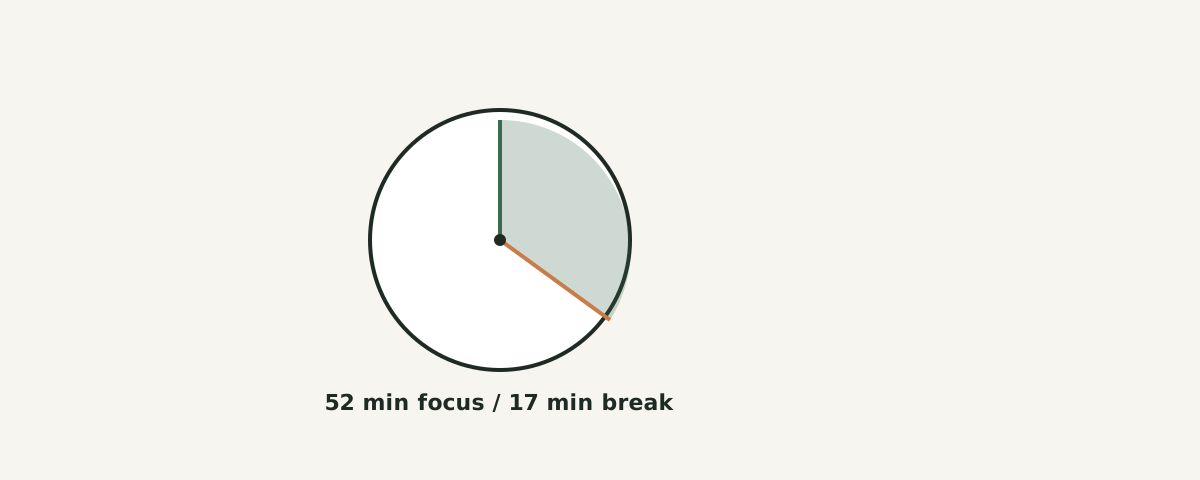
The "52 minutes on, 17 minutes off" figure traces back to a productivity-tracking app's analysis of its most productive users' self-reported work patterns, not a controlled scientific study. It's a real, interesting data point about what high performers in that dataset happened to do — but it's an observational average from one tool's user base, not a tested causal finding about optimal work intervals for everyone.
What attention research actually supports
Separately from that specific number, cognitive research on sustained attention does generally support the broader idea behind it: attention and performance on focused tasks tend to decline after sustained periods without a break, and brief breaks can help restore performance on the next work segment. What the research is less specific about is an exact universal number of minutes — optimal interval length appears to vary with task type, individual differences, and how mentally demanding the work is.
How this compares to the Pomodoro Technique
The Pomodoro Technique (25 minutes work, 5 minutes break) is older and more of a personal productivity system created by one developer in the late 1980s than a research-derived figure either. Both 52/17 and Pomodoro share the same underlying mechanism — structured breaks prevent the attention decline that comes with unbroken focus — they just propose different specific ratios.
| Method | Work interval | Break interval | Best suited for |
|---|---|---|---|
| Pomodoro | 25 min | 5 min | Tasks with frequent natural stopping points |
| 52/17 | 52 min | 17 min | Deep, harder-to-interrupt work |
The practical takeaway
Rather than adopting either ratio as a fixed rule, the more evidence-aligned approach is to notice your own attention decline point — most people can identify roughly when focus starts slipping during a task — and set break intervals slightly before that point, adjusting over a couple of weeks. This connects directly to having a clear signal that a break (or the workday) has actually ended, which is covered in our shutdown ritual guide.