The 90-90-90 Rule Is Outdated: What Current Ergonomics Guidance Actually Says
For years, 'elbows, hips, and knees all at 90 degrees' was the entire ergonomics conversation. That static target has been quietly replaced — here's what changed and why.

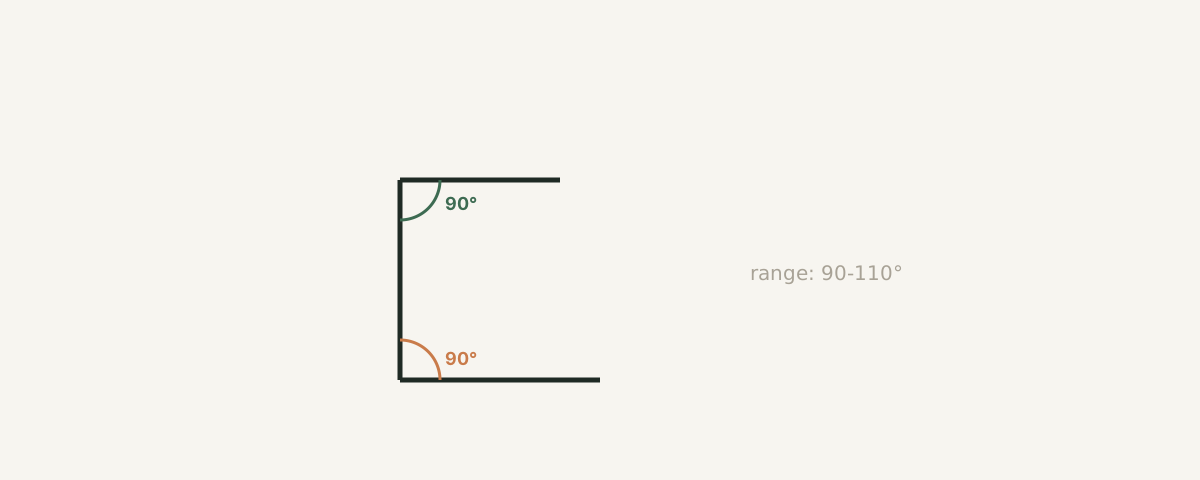
What the 90-90-90 rule actually said
The rule held that elbows, hips, and knees should each sit at roughly 90 degrees: feet flat on the floor, thighs parallel to the ground, forearms parallel to the desk surface. It was a useful, simple shorthand, and it's still not wrong as a single reference point — the problem is what it implied by omission.
Why it fell out of favor
The rule describes one static posture as "correct," which inadvertently encouraged people to hold a single fixed position for hours. Occupational health guidance has shifted toward emphasizing that no single posture, however well-angled, is healthy if held without variation for long periods. Static loading on the same muscles and discs for extended periods is now understood to contribute to discomfort independent of whether the angles are "correct."
There's also a practical issue: a true 90-90-90 setup at a single fixed desk height doesn't account for individual proportions. Someone with a longer femur relative to their torso will need a different seat height to achieve the same hip angle as someone with different proportions, which the rule doesn't address.
What current guidance recommends instead
Modern occupational ergonomics guidance generally emphasizes a range rather than a fixed angle — hip and knee angles between roughly 90-110° are considered acceptable — combined with the more important factor: regular postural change. Guidance from multiple occupational health bodies now recommends changing position, standing, or moving at intervals rather than maintaining any single "ideal" seated posture for extended stretches.
What this means for your setup
- Use 90-90-90 as a reasonable starting reference, not a rigid target to hold continuously
- Prioritize a chair and desk that make it easy to shift position — armrests that don't block movement, enough legroom to change leg position
- Build in standing or walking breaks; see our standing desk height calculator if you're adding a sit-stand option
- If you feel stiffness in the same spot repeatedly, the fix is more often "change position more often" than "find the one perfect angle"