Standing Desk Height Calculator: Elbow Angle Math for Any Height
Standing desk height isn't one-size-fits-all, and the generic 'about elbow height' advice leaves too much room for error. Here's the actual formula.

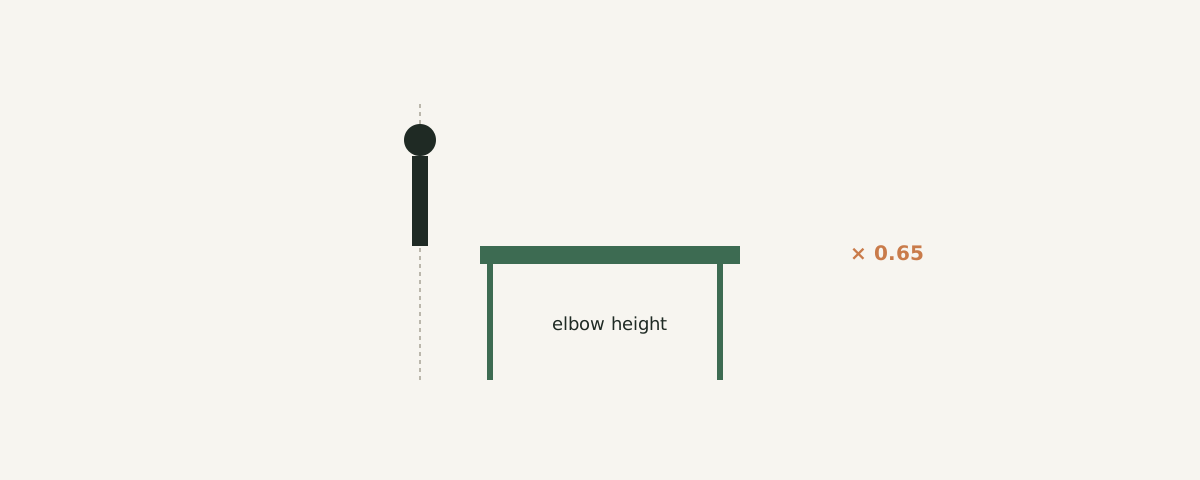
The formula
A commonly used starting-point formula for standing desk height is: standing height (cm) × 0.65, measured to elbow height while standing naturally with arms relaxed at your sides, then add roughly 2-3cm to account for keyboard thickness. This gets you within a close range; final fit still benefits from the fine-tuning step below.
Starting heights by user height
| Your height | Approx. elbow height while standing | Suggested desk surface height |
|---|---|---|
| 160cm | 98cm | 100-102cm |
| 170cm | 104cm | 106-108cm |
| 180cm | 110cm | 112-114cm |
| 190cm | 117cm | 119-121cm |
These numbers assume standing flat-footed in regular shoes or barefoot. If you'll be standing in shoes with a noticeably thick sole, add roughly 1-2cm.
Fine-tuning from the starting number
Once the desk is at the calculated height, stand naturally and let your arms hang relaxed, then bend your elbows to 90° without raising or dropping your shoulders. Your forearms should rest just at or barely above the desk surface. If your shoulders hike up to reach the keyboard, the desk is too high — lower it in 1cm increments until your shoulders stay relaxed.
The error to watch for: setting standing height based on where the desk "looks right" rather than checking shoulder position directly. A desk that's even 3-4cm too high causes shoulder elevation that compounds into neck and upper-back tension over a full day — small enough to miss in the moment, large enough to notice by evening.
Keyboard height vs. desk surface height
All the numbers above describe where your keyboard should sit, not necessarily the desk surface itself. If you use a keyboard with a thick base or a wrist rest that elevates your hands, account for that thickness when reading the table — the desk surface itself may need to sit slightly lower than the calculated number to keep the keyboard's typing surface at the right height. This is the same height-stacking issue covered from a different angle in our wrist and forearm pain guide.