Vertical Storage Systems for Desks Under 100cm Wide
A narrow desk doesn't have to mean cramped. The wall above and beside it is almost always unused — here's the math for turning it into working storage.

Why vertical solves what horizontal can't
A desk under 100cm wide has no room for a desktop organizer, a second monitor stand, and a notebook tray side by side. But the wall space directly above the desk, from about 15cm above the desk surface up to comfortable reach height around 170cm, is almost always empty. That's roughly 1m² of unused storage area on a desk this size.
Pegboard spacing math
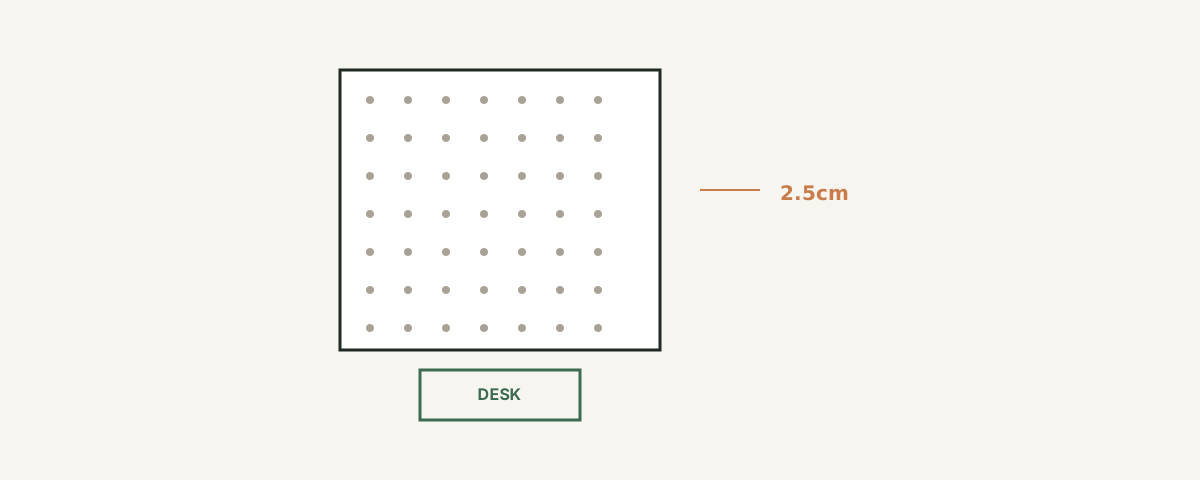
Standard pegboard hole spacing is 2.5cm on-center, which matters because it determines what hook spacing you can use. For desk accessories (headphone hooks, cable organizers, small bins), a hook spacing of 7.5-10cm (every 3-4 holes) gives enough room to hang items without them colliding.
Mount the board with the bottom edge starting 10-15cm above the desk surface — low enough to reach without standing, high enough that monitor height doesn't block access to the bottom row.
Wall-rail systems (the better option for narrow desks)
Wall-rail systems — a horizontal track with hanging accessories — outperform pegboard on desks under 100cm because the track itself is thin (typically 2-3cm deep) and doesn't eat into the limited width the way a pegboard's hook depth can when accessories swing.
| System | Mount depth | Best for |
|---|---|---|
| Pegboard | 1.2cm board + hook depth | Frequently rearranged items |
| Wall rail (track) | 2-3cm | Narrow desks, fixed accessory sets |
| Floating shelf | 15-20cm | Books, decor, less frequently used items |
Weight limits to check before mounting
The failure point is almost never the rail or pegboard itself — it's the wall anchor. Drywall anchors rated for typical pegboard hardware support 5-10kg per anchor point; for anything heavier (a small shelf holding books, for instance), use anchors rated to at least 15kg or mount directly into a wall stud where possible.
Tap the wall where you plan to mount. A dull thud usually means a stud is nearby; a hollow sound means you're between studs and need anchor hardware rated for the actual weight you're hanging, not just whatever screws came in the box.
Layout by desk width
For a desk between 70-90cm, a single vertical wall-rail column to one side of the monitor works best — it keeps the area directly behind the screen clear. For desks closer to 100cm, a horizontal rail spanning the width above the monitor adds capacity without crowding the sides where a lamp or speaker often sits. See our cable management guide for how to route cords up to wall-mounted accessories without visible trailing wires.