Folding Desks That Actually Hold a Laptop Steady: What to Check Before Buying
Most folding-desk complaints aren't about size — they're about wobble. Here's what separates a stable fold-down desk from one that shakes every time you type.

The wobble test (do this before buying, not after)
If you can see the product in a showroom or a friend has one, push down on the front edge of the desk with about 5kg of force — roughly the pressure of typing firmly. A stable desk flexes less than 1cm at the front edge. Anything that visibly bows or springs back slowly has a bracket or hinge that's undersized for the surface area.
Online, you can't do this test directly, so look for two things in the listing: the bracket material (steel triangulated brackets resist flex far better than folding L-brackets) and reviews that specifically mention typing stability, not just "easy to install."
Reading weight ratings correctly
A listed weight capacity of 40kg usually refers to static, evenly-distributed load — not the dynamic, edge-concentrated load of someone leaning on a corner while typing. As a rule of thumb, only plan to use 50-60% of the stated rating for actual desk-use weight (laptop, monitor, accessories) to leave margin for the dynamic forces of daily use.
| Setup | Approx. load | Minimum desk rating to look for |
|---|---|---|
| Laptop only | 2-3kg | 15kg+ |
| Laptop + monitor | 8-10kg | 25kg+ |
| Laptop + monitor + lamp/accessories | 10-14kg | 35kg+ |
Bracket types compared
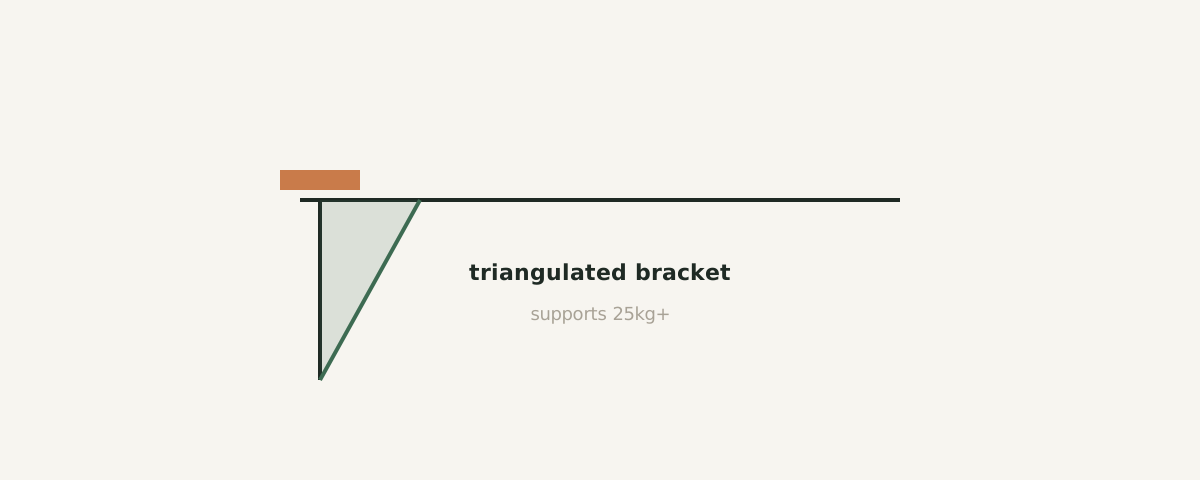
Triangulated steel brackets (a diagonal support arm forming a triangle from wall to desk underside) are the most stable for a given price point. Simple folding L-brackets without a diagonal support are the most common failure point in budget folding desks — they hold weight fine when stationary but flex noticeably under the lateral pressure of typing or writing.
Folding leg vs. wall-mounted: which is more stable
A folding-leg desk (legs fold under a fixed tabletop) is generally more stable than a wall-mounted fold-down desk of the same size, because the leg design distributes weight to the floor rather than relying entirely on wall anchor strength. Wall-mounted desks make sense when floor space when folded matters more than top-end stability — see our small-room layout guide for when that tradeoff is worth it.
Buying checklist
- Look for triangulated bracket support, not just a fold hinge
- Check weight rating, then plan to use only 50-60% of it for real-world load
- Read reviews specifically for "wobble," "stable while typing," or "shakes"
- Confirm wall material compatibility if wall-mounted — drywall-only anchors won't hold the same rating as stud-mounted hardware
- Measure folded depth against your room's walking-clearance needs from our desk setup guide