Single-Monitor vs Dual-Monitor in Small Rooms: A Space-vs-Output Tradeoff
Two monitors sound like strictly more capability, but in a small room the tradeoff is real — measured in both desk depth and neck rotation angle, not just preference.

The width problem
Two 24" monitors side by side, including bezels and stands, typically need 110-130cm of desk width to sit without crowding. On a desk under 120cm wide — common in the small-room layouts from our desk setup guide — this leaves little to no space for a keyboard tray, lamp, or notebook beside the screens.
Neck rotation angle with two screens
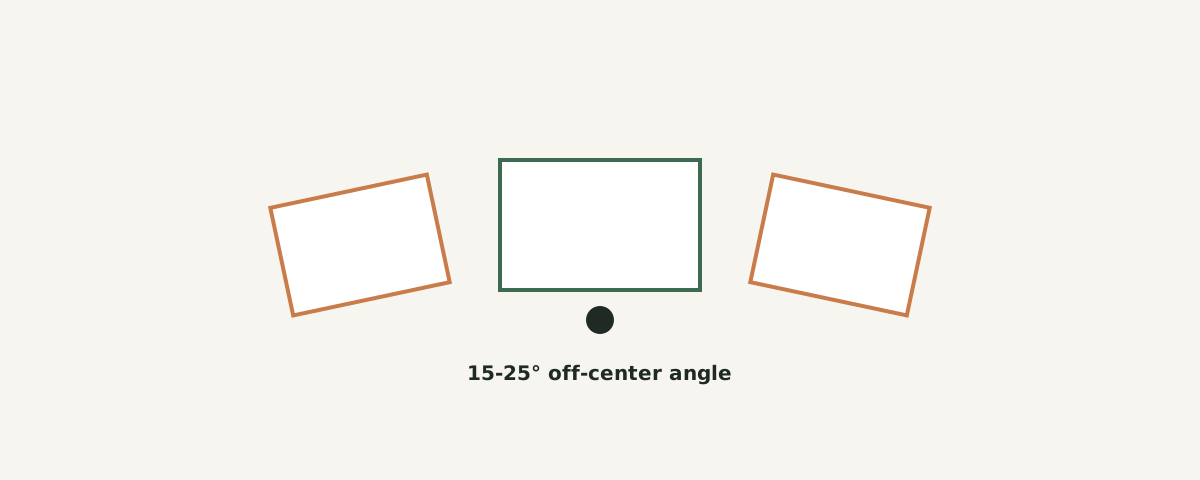
With monitors angled toward you in a typical dual setup, each screen sits at roughly 15-25° off center. Brief glances at that angle aren't a problem, but sustained work on one side screen for extended periods means holding a rotated neck position for that whole time — which runs counter to the movement-over-static-posture guidance covered in our 90-90-90 rule article.
The practical fix, if you do go dual-monitor, is using the angled side screen for secondary, glance-only content (chat, reference material) rather than primary focused work, keeping sustained tasks centered on the screen directly in front of you.
The single-large-screen alternative
A single 32-34" ultrawide or large monitor can replicate much of dual-monitor screen real estate — enough width to split into two working panes via window snapping — while staying centered in front of you, avoiding the neck rotation issue entirely. The tradeoff is viewing distance: per our monitor height and distance guide, a screen this large needs roughly 75-95cm of desk depth to view comfortably, which is itself a constraint in a small room.
Decision table
| Your situation | Better option |
|---|---|
| Desk width under 110cm | Single monitor (24-27") |
| Desk width 110-140cm, desk depth under 70cm | Single large/ultrawide monitor |
| Desk width over 140cm with adequate depth | Dual monitor, secondary screen for glance-only content |
| Frequent video calls in a small room | Single monitor — keeps camera framing centered without an off-angle gaze toward a side screen |
If you're not sure which category you fall into, measure desk width and depth first using the method in our small-room desk setup guide — the decision genuinely depends on those two numbers more than personal preference.